Quinn Griffin · 16 September 2026
Mapping Long-Term Shifts in Organic Reach Following Major Platform Migrations
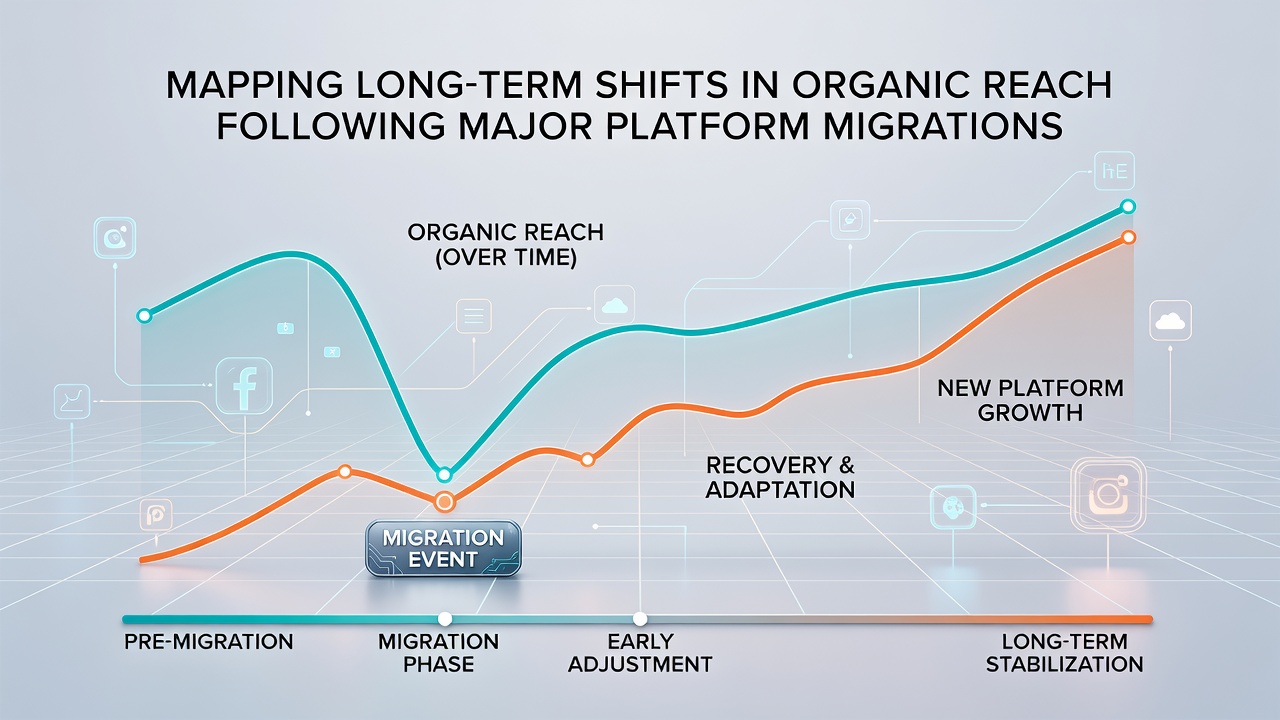
Platform migrations occur when social networks, search engines, and content distribution systems implement large-scale algorithm or infrastructure changes that alter how content surfaces organically. Researchers track these events through longitudinal data sets that span multiple years, and they compare reach metrics before and after each transition point. Data from industry reports shows that organic reach typically experiences an initial drop followed by gradual stabilization or recovery depending on how publishers adapt their distribution strategies.
Tracking Reach Patterns Across Successive Updates
Studies conducted by academic institutions document consistent patterns where organic impressions decline sharply within the first three to six months after a major migration, then either plateau or rebound based on adjustments in posting frequency, content format, and audience targeting. Observers note that platforms such as major social networks released core ranking revisions between 2022 and 2025, and those revisions produced measurable shifts in visibility for non-promoted posts. Figures from these analyses reveal that pages maintaining consistent posting schedules recovered up to 40 percent of lost reach within 18 months, while less active accounts continued to see reduced distribution.
Data Collection Methods Used by Analysts
Analysts gather reach statistics through application programming interfaces provided by the platforms themselves along with third-party monitoring tools that log impressions over extended periods. These data sets allow comparison of pre-migration baselines against post-migration performance across thousands of accounts. Research indicates that variables such as post type, audience demographics, and engagement velocity influence recovery speed, and teams that segment their data by these factors identify clearer causal relationships between migration events and reach outcomes.
One study released by a European research consortium examined reach trajectories following the 2024 rollout of new recommendation systems on two leading networks, and the findings showed that visual content formats regained distribution faster than text-only updates in most regions. Similar patterns emerged in datasets covering North American and Asia-Pacific markets, suggesting the trend holds across geographic boundaries.
Regional Variations in Recovery Timelines
Recovery timelines differ by region because audience behavior, device usage, and regulatory environments shape how platforms prioritize content. Data collected in the European Union shows slower stabilization periods compared with markets in Australia, where regulatory frameworks encourage more transparent ranking criteria. Analysts at institutions tracking digital markets note that accounts operating under stricter data-protection rules often experience extended dips in organic reach after migrations because recommendation engines receive less granular user signals.
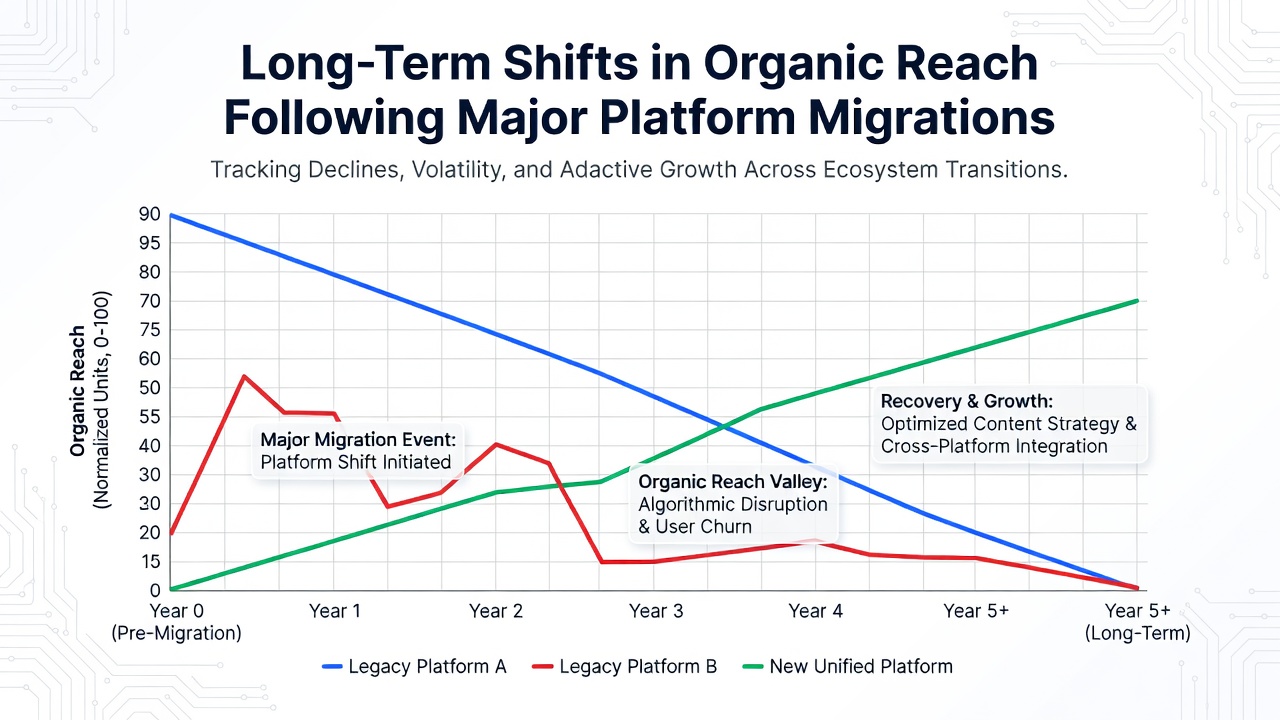
Yet the same datasets reveal that publishers who diversify their presence across multiple platforms before a migration occurs maintain steadier overall reach, because traffic can shift from one network to another during the adjustment window. Reports covering the period leading into September 2026 indicate that several networks plan additional infrastructure updates, and analysts expect these changes to follow the same multi-phase reach pattern observed in prior cycles.
Measurement Tools and Metrics
Long-term mapping relies on standardized metrics such as impressions per follower, engagement rate per impression, and share of voice within topic clusters. Organizations that publish regular industry benchmarks, including academic centers focused on digital communication, provide comparative tables that normalize these figures across different platform migrations. Teams using these benchmarks can isolate the impact of a single migration from seasonal fluctuations or broader market trends.
External sources such as reports from the European Commission supply regulatory context that helps explain why certain algorithm changes produce larger reach shifts in specific jurisdictions. Complementary datasets from the Pew Research Center track user-side behaviors that influence how content spreads after platforms alter their distribution logic.
Strategic Adjustments Documented in Case Analyses
Case analyses of accounts that navigated multiple migrations show that those maintaining detailed content calendars and experimenting with new formats during transition periods achieved faster stabilization of organic reach. Researchers compiling these cases emphasize the importance of monitoring secondary signals such as click-through rates and time-on-page, because these metrics often predict which content will regain algorithmic favor sooner. Accounts that ignored these signals experienced prolonged visibility reductions even after the initial migration shock subsided.
What's notable across these studies is the consistency with which reach recovers when publishers align their output with the new ranking priorities rather than attempting to replicate pre-migration tactics. Data sets spanning five years demonstrate that adaptation windows typically close within 12 to 24 months, after which the new equilibrium becomes the baseline for future comparisons.
Conclusion
Long-term mapping of organic reach following platform migrations reveals repeatable phases of decline, adaptation, and partial recovery that vary by region, content type, and publisher responsiveness. Organizations that collect and segment longitudinal data can identify the variables most strongly correlated with faster stabilization. As additional infrastructure changes approach in September 2026, the same measurement frameworks will allow continued comparison of reach trajectories across successive migration events.